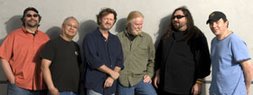
3/30/00 Interview w/ Todd Nance

ROCK ATHENS ATHENSONLINE.COM

Interview with Todd Nance of Widespread Panic
By David Bill

The following interview was conducted with Todd Nance, drummer for Widespread Panic, on Thursday, March 23. He talked with Athens Daily News/Banner-Herald News Editor David Bill by phone from John Keane's studio in Athens.


Q: Why'd you pick Athens to open the tour?
TN: We just like playing in Athens. We always wanted to play in Athens again, and it's a good place to start the tour. We thought that we would ask the folks who normally tape the shows to leave their rigs at home those three nights and let us do the taping, and we'll release them at a later date. It's got a little specialness to it.

Q: That would probably be quite a few CDs, wouldn't it?
TN: It probably wouldn't be released all at the same time. We just started up Widespread Records. We created it mainly to release live projects, possible side projects. I doubt that there'll be any six-CD box sets. We might release it a show at a time.

Q: I understand your contract is up with Capricorn.
TN: Yeah, we fulfilled our commitment when we turned in the masters for 'Til the Medicine Takes.'

Q: And you're working on a new studio CD?
TN: We're at John Keane's right now. We wrote about a dozen new songs, which we'll take out and shop around in the next couple of months.

Q: So you're still looking for a major label?
TN: Right, to put out our studio stuff. It seems to be a trend these days, especially with some of the more jam-oriented bands, where the labels allow them to put out stuff that they really don't want to.

Q: So how does the new material sound?
TN: This stuff is a lot more rockin'. It's definitely more edgier that 'Til The Medicine Takes.' We had a good little writing session here in the last month or so, we've just been creating songs and laying down over here.

Q: Has this been a good break for you?
TN: Yeah, we normally don't travel during the winters, but we're always in the studio in January and February, and everybody's got their other things. So usually winter is a working time, but at least we get to stay in our own bed, so that's a nice thing about it.

Q: Do you see the Clasic Center shows as sort of a homecoming?
TN: Playing Athens is always kind of a homecoming. We get to see a lot of the old fans that used to come out and see us 14 years ago at the Uptown. So that's kind of nice. It's kind of a treat for us. We don't get to do it much anymore.

Q: Got any plans for anyone to play with you?
TN: I think Chuck Leavell, Randall Bramblett, Danny (Hutchens) and Eric (Carter) from Bloodkin, I think Derek Trucks is going to stop by, I think Bill Berry may stop by and sit in on drums with us a little bit. We thought we'd have kind of a Georgia theme to it, or an Athens theme to it.

Q: As I understand it, the live CD you're putting out is from shows with the Dirty Dozen Brass Band?
TN: We toured with them last summer, and we did a handful of shows with them last fall. We're going to release a CD - it's called 'Another Joyous Occasion' - sometime in May.

Q: How are you going to handle distrubtion for this?
TN: Well, once again we're experiencing growing pains, and we're having to find some more space to put all our junk. Basically, we'll have another warehouse space to handle our merchandise and records. We're going to try to do this thing in-house. We'll possibly use retail distributors.

Q: It's a big project, isn't it.
TN: Yes, we're definitely stepping into the deep end on this (laughs).

Q: Going around the country, do you pretty much sell out everywhere now?
TN: Everywhere is starting to fill out pretty well for us now. Besides the South, I'd say our strongholds would be the Midwest region around Chicago; the Rocky Mountains out around Colorado, we do pretty well there - we're going to start off our summer tour with three nights at Red Rocks; the Pacific Northwest is coming around for us pretty good. Probably some of the slower areas would be the Southwest and part of the East Coast, though some of the East Coast is starting to come around for us pretty good. It's all grown substantially over the last year.

Q: Did you ever in your wildest imagination, when playing in the Uptown, dream you'd be selling out these venues around the country?
TN: I was amazed people came and listened to us, and didn't think past that. I didn't know what to expect, to be honest with you. It was always kind of baffling to me. It seemed like the more we'd play for ourselves, as opposed to trying to cater to whatever everyone else wants, that usually gets us in trouble. And when we stick to what pleases us, that seems to be what goes over the best. And you can't argue with that.

Q: When did you realize that you were going to be able to do this for a living?
TN: I guess it was around '90 or '91 when I quit waking up in the middle of the night scared to death that it could all end tomorrow. But there was just some point that I knew that if we didn't play anymore it was still going to go on, that it's gotten bigger than the band.

Q: How do you refer to yourselves musically? We usually refer to you as a jam-rock band.
TN: We're just music. We're basically just derivative of most forms of Southern music.

Q: What do you think when you get lumped into a genre with bands such as Phish and Blues Traveler?
TN: It's the same kind of fan-based, the same philosophy toward playing, but the bands you mentioned don't sound anything alike. It's the jam-rock thing. There's a lot of people out there that go for that and that's why they come see it three times a year because no two shows are alike.

Q: How do you come up with set lists?
TN: We used to just call them off the top of our heads, but once the set list got over a hundred tunes we started forgetting about a lot of songs. So now about a half hour before the set we sit down together - it has to be at least three of us (laughs) ... between three and six of us get together - and figure it out. But we always make it a group thing.

Q: Do you always know when you're going to do a segue from one song to another, or into a jam or something else, and then back to the first song?
TN: A lot of times on the set list we'll write a song out and put an arrow at the end of it. That can be anything, but basically what it means is 'don't stop.' It can turn into a segue or the last song you were playing could become the next song. So you never know. It could turn into a 20-minute voyage or it could just fail miserably.

Q: Oh, that doesn't happen that often, does it?
TN: Sometimes (laughs), but no, everybody pretty much has this confidence to not get spooked.

Q: You play together about 180 shows a year?
TN: These days it's about 120.

Q: Do you all ever get tired of each other?
TN: Around the sixth week of the tour you start hating it (laughs). But no, we all get along pretty good with each other, so it works out pretty good.

Q: That's a lot of traveling and playing. Are there nights you get set up and say 'I don't really want to play'?
TN: No, not really. It's more like, 'I don't want to go to this radio station today,' or 'I don't want to do this or do that.' But you never say, 'I don't feel like playing.' That's the best part of the day. Even if you're sick as a dog, when you play, that's the only time you feel good. It's the greatest pain killer I've found. It pretty much overrides everything.

Q: Was this past year the first time you went to Europe on a tour?
TN: No our first trip was two years ago, and we've been over there three times.

Q: Do you have plans to go back this year?
TN: No, probably not this year. We'll try to get something going next year. Unless 'Another Joyous Occasion' does well in Europe, that would warrant a tour over there. But as of now, probably next year.

Q: What was it like playing over there. Were the people pretty receptive to you?
TN: It was mostly Americans that followed us over there (laughs). I was standing in the lobby of a hotel in Australia and these guys from Mississippi and Alabama walked up and they went around the world with us. But we definitely played to a few Europeans in that market, and we got a good response.

Q: You will be going back sometime?
TN: Yeah, we'll definitely go back. But like I said, this year we got spring, summer and fall tours, so we don't really have time. Last year we came home for about five days after the release of the record and summer tour, which ended in New York, and then spent all of August basically running around Germany, and then came back home for a couple of weeks and went out on the fall tour. So by the end of this year, our butts were dragging pretty much.

Q: You're going to give yourself a little more of a break this year?
TN: Well, spring tour is always fun and easy because it's usually less than six weeks long and it's big cushy gigs. And the summertime is cool because of all the big shows and playing with bands we like. And then on fall tour you start getting worn down a bit. By October, November, the road starts showing on you a little bit.


Q: So you're feeling rejuvenated now?
TN: Oh, yeah, definitely. I'm ready to go.

Q: I see on the spring tour you're playing the Beale Street Festival in Memphis and a couple of House of Blues runs.
TN: Yeah, we're doing three nights each in Myrtle Beach and Orlando. That's become kind of an annual thing. We like the House of Blues a lot. It's a fun place to play.

Q: Why is that? Is it the place itself or the people?
TN: The way it's set up. It's made for music. Unlike a Hard Rock Cafe, the House of Blues is geared for music. And the people's attitude there is a musical attitude. The place is always packed. We have good shows there and I like doing the multi-night stands, when you can settle in like that. You can sleep in a bed, and you're not bouncing around in a bus all night long. You get to rest up a little bit better.

Q: Are you pretty happy with where you are now? Do you want more fame and fortune?
TN: I could go with more fortune, but I don't know about the fame (laughs). But I'm very happy with where I'm at today. And I expect to be somewhere further tomorrow.

Q: What do you consider your musical influences?
TN: I guess my favorite style of music is the blues. JoJo has infected us all with New Orleans music. That's become pretty much the biggest influence on the band as a whole, with the exception of ourselves. We sit around and turn each other on to music, and we listen to each other and each other's music and opinions more than anyone else.

Q: I'm sure you've run into a lot of bands out on the national music scene. Who are a couple of some unsung heroes?
TN: Bloodkin is definitely at the top of my list of unsung heroes. Jerry Joseph and the Jackmormons is another one. Cowboy Mouth - those guys are punching away. There's a lot of them out there. When Bloodkin's out there bouncing around, I just shake my head and don't understand why they're not heard more.

Q: It seems like they're getting a little more respect now.
TN: They're getting a lot more respect from the Panic crowd now, but I think they're crossing that line of having that integrity, but still being able to appeal to a broad range of people. Danny Hutchens, man he's one of the greatest lyricists out there I've ever met. Vic Chesnutt is another who falls into that category. I don't know about Vic's broad appeal, he's a little more avant garde, not quite as mainstream sounding.

Q: Some of the people who got tickets in the lottery probably haven't see Panic before. How do you describe yourselves? What should they expect from a Panic show?
TN: They'll probably be wondering what the hell this is (laughs). It's hard to come see us one time and get it. Because that show is just a single facet of many of what the band can sound like. You got to get a few shows under your belt to see where it's capable of going and to be able to get into it.


-

11/12/99 Interview w/ Mike Houser

Widespread Panic
By Paul Ghiotto for
Detours @Alligator.org

In a rock 'n' roll world of "buzz clips," corporate record mega-mergers and Britney Spears, Athens, Ga.-based Widespread Panic has managed to do the impossible.

The band, which plays the O'Connell Center Sunday night, has trod the well-worn jam band path by drawing in fans without the help of MTV, platinum records or top-40 hits. They've done it by throwing rock 'n' roll, jazz-influenced jams and intelligent lyrics into a blender, tying songs together seamlessly. A 20-minute Chilly Water ---> Dying Man ---> Chilly Water jam certainly ain't instant gratification.

Luckily for Panic, the fans aren't looking for 3-minute album regurgitations.

"Spreadheads" will drive hundreds of miles to see to a band affectionately known as "The Boys," then scrawl down the set lists on the backs of ticket stubs. A thicket of microphone stands pops up during shows so tapes can be traded later. And Web sites like the Spreadweb (www.netspace.org/Widespread/) have been created in case anyone wanted to know how many times, and where, the band played "Coconuts." Three years have passed since Panic took the stage at the dank but comfortable Florida Theatre. But what a difference a few hundred shows make.

Since 1996, Panic has accomplished some not-so-modest feats, including the release of three albums and its latest effort, "'Til the Medicine Takes;" playing a free show before a throng of 100,000 on the streets of Athens, Ga.; and routinely selling out four-night New Year's Eve runs at Atlanta's stunning Fox Theatre.

But the band, comprised of the Fogerty-like growls of vocalist John Bell, bassist Dave Schools, drummer Todd Nance, percussionist Domingo "Sonny" Ortiz and Professor Longhair-influenced keyboardist John "Jojo" Hermann has filled a niche in rock 'n' roll. They're southern without being cartoonish; they're a jam band whose lead singer wears cowboy boots instead of tie-dye.

Panic lead guitarist Mike Houser has his own quirks. Unlike most rock guitarists, he sits on a chair, bluesman-like, throughout an entire show, his head bowed and face obscured by curly hair. Houser's trademark style, like a cross between Yes' Steve Howe and the Marshall Tucker Band's Toy Caldwell, drives his band's jams and whips most crowds into a frenzied, pot-smelling tangle of sweating, dancing bodies.

Detours recently caught up with Houser to ask a few questions about Athens, Panic's new album, jumpin' off amps and his take on the "World's Largest Outdoor Cocktail Party."

Detours: Since the last time y'all came to Gainesville, that must have been in '97, you played in a venue that fit maybe 3,000, and now you're basically playing the basketball arena.

Houser: We've been playing in arenas all across the country and, you know, we don't always fill them up but it seems like we always get a good crowd. Either the record has made a difference, but we've had a lot of people in a lot of places.

Detours: How's the album doing so far?

Houser: It seems to be doing pretty good. "Dying Man" has gotten a lot of radio airplay and now they're shifting their focus to the next song which would be "Climb to Safety," I guess.

Detours: It seems like that one's a bit more radio-friendly than the others; it's a bit shorter...

Houser: Yeah, yeah. That's a song a friend of ours, Jerry Joseph, wrote and we figured it was a good song to put on there because it is very radio-friendly.

Detours: As far as your record goes, the last I heard you had a contract with Capricorn records to produce "X" amount of albums. Was this the last one in a series or do you have more albums to produce for Capricorn?

Houser: This was the last record in our contract with Capricorn. We signed back in 1990, I guess. We signed for seven records and one of those was a live record.

Detours: Any plans to sign back with Capricorn?

Houser: Well, you know, we really don't have any plans right now. We're still kind of riding this record and don't really know what's going to happen to us. You know, the record industry... I guess most people don't realize what turmoil it's in right now. With the internet, and there have been a lot of mergers, the record industry is a bit ahead of us right now.

We're going to sit tight and see what happens. I'm sure by January we'll probably know where we'll go. And I'm sure whatever company we sign with will want us to do another studio album pretty quick, so I'm sure we'll be getting to work on it before too long.

Detours: Really. Well, this album... it's interesting that y'all cut it in Athens. Some of the reviews I've read have kind of dubbed it "the country album." What do you think about that?

Houser: I haven't seen any of those. Let's see... well, definitely "Waker" obviously has a country feel to it. I don't know that anything else on there does. You know, "Dying Man" has kind of those bluegrass harmonies...

Detours: It seems the kind of tempo on maybe "Nobody's Loss" or even "Blue Indian" has...

Houser: Yeah, I have heard people say that had a "country" thing to it; to me, it's too bluesy to be in a country vein. But you know people... everyone gets a different impression. As long as they don't throw it in the trash, it's alright.

Detours: That's interesting. It's seems like there's a concurrent theme going through it, and I'm wondering if that was you, or John Keane, or it just so happened to be more, dare I say, "southern" than some of the previous albums.

Houser: You know, we really didn't have any concept going in when we made this record. A lot of people have commented on the fact that it seems more polished, or more studio-ey than our records have in the past. We really didn't talk about it, we didn't do anything different. We played the same guitars, we ate the same food and drank the same beer as we always do... it just came out that way.

And John Keane had a lot to do with it, but he's produced five of our records now, so it's not like we changed producers or anything. It just came out this way, and I don't think there's just one explanation. But we were very happy with it. I think when we were done with it we all kind of sensed that it was a little bit of a departure, but it wasn't really anything done intentionally. I think we're all really happy with it. It's exciting to do something new after... I guess that's out sixth studio record. I think we kind of 'let go' a little more and let John Keane produce a little more, and we were open to any sort of ideas that anyone had.

I think it made for an interesting record. It's been a lot of records that we've done, and when you can do something that you haven't tried... it's exciting for everybody. It's exciting for us, and most of the comments I've heard were that it seems to be more produced than any record we've done so far. At least nobody has said to my face that they didn't like it. Most people seem to enjoy the little extras that we put in there.

Detours: The album to me... I think why people are saying it's a bit more Southern is because you're drawing from a lot of different regional influences from within the South, almost sub-regional influences. Whether it be Dottie Peoples with that gospel, and the banjo, and you've got that Dixieland horn... if it was subconscious, it was a heck of an effort.

Houser: Well, yeah, it really was. We didn't have any plans coming into this album. We had a selection of songs we knew we were going to choose from, so we went like we always do and recorded all of them. And we picked what we wanted out of that bunch. We just got to produce it and got to record it and it just came out that way. Like I said before, we're all real excited, and... it's my favorite record. Whatever we did, it seemed to work.

Detours: I read some of the updates on your website during the recording process. How influential was that sense of place, of being home, when you were recording this album as opposed to being in Nashville or New York or wherever it might be?

Houser: Well, we've recorded a couple of records outside of Athens. John Keane, when we first got the band together in 1986 or whatever, we met John Keane. We recorded Space Wrangler in his studio. It was just a two-minute walk from the "band house." We've known John our whole musical lives, and he's known us. He recognized early on that we were not going to be the kind of band that would fit into a standard band mold. So we've had a long history with John. He played on Space Wrangler... there's stuff on Space Wrangler that John Keane played on.

We've had a long history with him. We've watched his studio grow from, you know, when he was living in the studio and there were beds in the hallway to what we call the "Keane Compound." It's actually two houses. One of them he lives in with his family, the other one he has devoted totally to the studio. It really has come a long way, and John... I think he's one of the best people out there as far as recording. He can play any instrument, he can sing, he's very technical... he knows every inch of every piece of equipment that's in there. And he knows us, and we know him. I mean we've been recording in that studio since 1987. It's an old house; if you just drove past it, you would just think it was somebody's house. And so you go in there and you're in a living room and the studio's back in the other part of the house. So you just feel very at home there, and we've been sitting on that same sofa for ten years now.

We really love it there. I mean, you would be hard-pressed to get us out of there. As a matter of fact, we've already booked time there next year to work on our next record, whoever we sign with. It's a very comfortable place, and it's not the kind of place where you can just slack off because John is very intense. So it's comfortable, but it's also a real work environment, so we get a lot done in there. And that why we love it, because John creates this environment where you feel good, but you're still giving 100 percent. It's just a perfect place for us, and I hope we can always make records there.

We made a record in Nashville, and we made a record in muscle Shoals, Alabama. And you know, I'm proud of those records, and we had some good times while we were over there. But what happens when you're recording is that it takes about six weeks or two months, and a lot of that time is down time. For the first couple of weeks of any record, everybody's working, and it becomes a matter of "Mike's gonna do a guitar part today, and then John's gonna do a guitar part tomorrow, then Dave's gonna do something." So you end up with a lot of time on your hands, and if you're living in a hotel room in some town you don't know, it gets to be a drag. And it really starts to weigh on you.

When we're in Athens, if somebody else is doing a part, then I can go home and fix dinner for my family or whatever it is I have to do. Then I can go back over to the studio and do my part, or listen to my part, or whatever. So it's just great all around, being in Athens. Athens is a really cool town; we love it.

Detours: One thing I don't want to harp upon... but what is it about your sense of place? are you a native Georgian?

Houser: No, none of us are. We actually come from all parts of the country. J. B. is from Ohio, and JoJo is from Manhattan, and I'm from North Carolina, and Todd's from Tennessee and Sonny's from Texas. So we're all transplants. But Athens is just a great music town. I went there to go to college and really had no intention of being in a band or anything. I met J.B. there, and we started a band, and it's the kind of town where you can start a band and get somewhere because people really respect original music in Athens. You can't go out in Athens anywhere and find a band playing cover songs. Nobody wants to hear that; they don't care if your music sucks as long as its your music. It's a really great town for a bunch of guys to get together and play some tunes.

Detours: It is interesting...I was up there this past Saturday, and I went to this pharmacy with 50 cent ice cream. The girl I was with goes to Georgia, and she was telling me they were threatening to put in this Eckerd's across the street, and the town rallied around this. She said Michael Stipe even went to a commission meeting to speak against it...

Houser: That's my neighborhood. You were at Hodgson's, and my wife was really in an uproar about it too because that Eckerd's was really going to create a traffic problem there. That part of town is called five points. And the community just got together and made such an uproar that Eckerd's just backed out. So we're getting a natural foods store in there, which is great.

Detours: Very nice.

Houser: But yeah, people are very active in the community. Obviously, R.E.M. is very active. And you can walk around Athens and you can see guys who were in the big bands when we started. Everybody stays there. You're in your band for awhile, and then you start doing something else, and then you have a family, and you live there and become part of the community, and that the way it has worked. I still run into people I used to go and see play when I was in college. They're still in town. They may be painting houses as a day job, but they still have their garage with their band setup. And they still sell tapes and everything.

And it's a big arts community. There's a lot of art, and there's a lot a film in Athens. I wouldn't be surprised if someday you hear of an Athens film festival. It's just a great place.

Detours: It seems like it has fostered countless bands. It seems like a really fertile place. Something I've always wondered... personally, I've seen you guys play many times since 1995, and you had obviously been together nine years by then. Watching the progression of your growth, do you ever sit down and say, "We're playing a 10,000 stadium in Ohio." Does it ever strike you?

Houser: Well, it happened to me just the other day... well, it was yesterday and we were in Charlottesville. You know, my parents live up there about 20 miles outside of Charlottesville, Virginia. They came to see us at a place when there were three people in the bar. And they came last night and there was three or four thousand kids in a basketball arena. You know, I just thought about it, and how far we've come and what my parents must think. It's a lot of fun.

Obviously, none of us really ever imagined we would be here. When we started our band In Athens, we were the black sheep. We were playing jam rock when everyone else was playing jangle rock. People just didn't give us much of a chance to do anything. We've survived and prospered somehow...kind of like a weed, I guess.

It's been a great ride, and we're all really appreciative of what we have. We have the same people that we've always had. Even some of our crew guys have been with us for over 10 years, so it's like one big family. We run into bands all the time that are made up of guys thrown together by a record company or whatever, and they always comment on the fact that we have such a tight-knit bunch of people.

It's been a lot of fun, and we couldn't have done it without the tremendous fan support we have. We don't get a lot of radio air play or video air play or anything like that; it's really the fans who keep the ball rolling.

Detours: I saw an article in the Wall Street Journal commenting about record sales and your continued success... And it seems to me, I've seen you in several different parts of the country, and it seems to me people in other parts of the country In interviews use the label "southern rock." It seems like an easy label to throw on, but obviously a bit inaccurate. What do you think about that easy tag?

Houser: It is... people are always looking for an easy way to describe something. And I don't think of us as "southern rock." I think of us as a southern rock band, but not "southern rock" like Lynyrd Skynyrd. I think of us as being a rock band from the south. But other people always want to put a tag on you, and we obviously give them opportunities. There are obviously southern influences in the music, and we don't want to debate that or take anything away from that.

A lot of us grew up in the south, and listened to a lot of that stuff growing up. And so there are influences there, but there are also many other influences that we bring into the music. So to just say "it's a southern band" is one thing.. if they said "southern influences," that's more accurate.

To call us a "southern rock" band just brings up negative connotations, but there's nothing you can do about it. People are going to write what they write. All you can hope is that they'll come to the show and actually see for themselves what it is, and then decide what they think.

Detours: Do you ever wonder about the connect the audience makes with you? Especially in the South, there's a connect that people make with you... it's as if your band is theirs. Just the term, "The Boys." I'm sure you've heard that plenty of times. For people who are complete strangers in central Alabama who call you "The Boys"... how do you feel about that?

Houser: Yeah, I know what you mean...it's very personal. It's very flattering. Somebody feels like they know so much about you that they can call you a nickname, that means you have done something on a very personal level, and and I don't know what it is that we do that does that. We just started out as a rock band. We really didn't have any intentions or ideas about what was going to happen. We just wanted to play our music without any interference from the outside world. We never wanted someone to say, "You guys have to do this..." We've always did everything the way we wanted to do it, and not the way other people told us would be best for us. We haven't let other people influence us. Whatever it is, the fan really... I think they're a bigger story than we are.

We do what we do, and we try very hard. We live and breathe Widespread Panic all the time. Nobody gets up there without being prepared to give all they have. And when we go out on the road, it's the same thing. By the end of the tour we're usually crawling home. But I don't know.

It's strange. I think about it sometimes; I don't know what people like about us so much. Obviously, we try hard; and obviously, we write decent music. But I don't know what it is that's that extra, but the people seem to feel it. We're all really grateful that we have it, but nobody seems to know what it is.

Detours: It seems that the best rock 'n' roll is that music where you've got that connect right off the bat, and you can say it or play it and people know it... an unspeakable knowledge, and people know it's there. If we were playing for a different people, we'd quit. It's that fan spirit that's the driving force behind it.

Detours: It also seems your stage presence is different from the stage presence of a lot of other rock guitarists, too.

Houser: Well, I've been that way my whole life. I was in a little garage band when I was in high school in Chattanooga. These guys were all stage masters, they were all doing their poses and everything. And I would just stand there, and they sat me down and had a meeting with me about my stage presence. Well, we were just fifteen, and we didn't have any gigs or anything, but these guys were really into their looks.

Detours: What was the band's name?

Houser: Awww, we didn't have a name, we were just a bunch of kids. I've always felt that the music was always important, and not what a guy was doing gymnastically or whatever.

Obviously, I sit down now, so that rules out any sort of physical activity on my part. And to some people, that's a real drag. Not really to people who are into the music... but I read an article in the paper the other day and whoever it was who reviewed the show just loved it and everything. Then they got to me and said, "But Michael Houser, the guitar player, is the least charismatic person I've ever seen."

No matter what they think about me personally matters. And that's the way I've always felt. And I'm just not the kind of person, and never was... even when I stood up, I just stood as still as I possibly could. But that's just me and it's not for everybody. I'm not saying it's the right way, or anything like that, but that's just the way I've always been.

And I have to concentrate. I don't have time to think about, and never had had time to think about, anything else. When the music starts, that's where my mind goes, and that's really all that's in there.

Detours: So jumpin' off the amps was never a priority?

Houser: (deadpan) No. And nothin' is... once we start playing, I typically close my eyes, and I'm not aware of anything but the music. I'm always surprised when the set's over because it seemed like it just started.

Detours: So what prompted you to sit down? Was it the ease of being able to zone into it?

Houser: Well, no, I actually started sitting down, and I sat down for a couple of years when we first started in '86 and '87, I guess. And I got a lot of people asking me about it... they thought I was blind, or whatever. I had several people come up and say, "I'm sorry you can't see." And so I started standing up just out of sheer frustration with not wanting to deal with questions...but I was always more comfortable sitting down.

And then, I started using a volume pedal very early on with my right foot and I use it constantly. I would end up standing on my left leg for three hours a night just stock-still and I developed leg and back problems. A couple of years ago I just said, "I have to sit down, and if people don't like it I guess I'm gonna have to start driving a taxi or something." So I started to sit down. And what I found was it was easier to play and I have a better range on my guitar and I enjoy it so much more.

I had let the problem go so long that I was expending more energy every night to stand up than I was actually using to play. It couldn't continue. I did it, and no one has ever said anything to me about it. People have questioned me about it, but when I tell them why, they shake their head and go, "Oh, I see."

You know, no one's ever thrown anything at me or called me lazy or anything. I'm happy about that.

Detours: I don't believe anything like that is gonna happen down here.

Houser: Well, no, you worry about things and you get pissed but then you say, "Aww, it's silly to worry about it." But you never know in advance.

Detours: Well, before we go, I wanted to see if you would be willing to do some word association.

Houser: Well yeah, I haven't done that in a really long time.

Detours: Weaver D's?


Houser: Bar-b-que.

Detours: Florida Gators?

Houser: Florida Gators? I'd have to say Gainesville.

Detours: Now with the big game comin' up...

Houser: Oh, is it time for the Georgia-Florida? Oh, okay. When is that? Is it this coming weekend?

Detours: Yeah, I believe it is.

Houser: You know, I never made it... I was at UGA for five-and-a-half years and I never made it down there for one of those.

Detours: That's something to be proud of.

Houser: I had a lot of friends who would go down, but I never could do it. They don't do it anymore there, do they? It's not the "World's Largest Cocktail Party?"

Detours: They still claim that...

Houser: ...but they've restricted it quite a bit, huh? You just can't have a good time anymore.

Detours: Let's see...Capricorn.

Houser: Capricorn. God, that brings up so many. I have two things. I'm a Capricorn, too... I was born in January. So I have a lot of words that go with that.

The first thing that flashed into my head was a goat.

Detours: Goat? Let's see. Kudzu? Houser: Kings.

Detours: Last one...Quincy Carter; no, Halloween.


Houser: Halloween...the first thing I thought of was black cat.

Detours: So do you have costume and everything?

Houser: My wife is working on it, and I leave it up to her. She's actually coming to New Orleans to meet me, and I have no idea what it's going to be. I'm sure it's going to be good.

I guess we'll see you down in Gainesville.

Detours: Well, have a good trip and have a good time in New Orleans.

Houser: And we'll see you down in Florida.
Google